
Largo FL Concrete Timing: Best Season to Pour
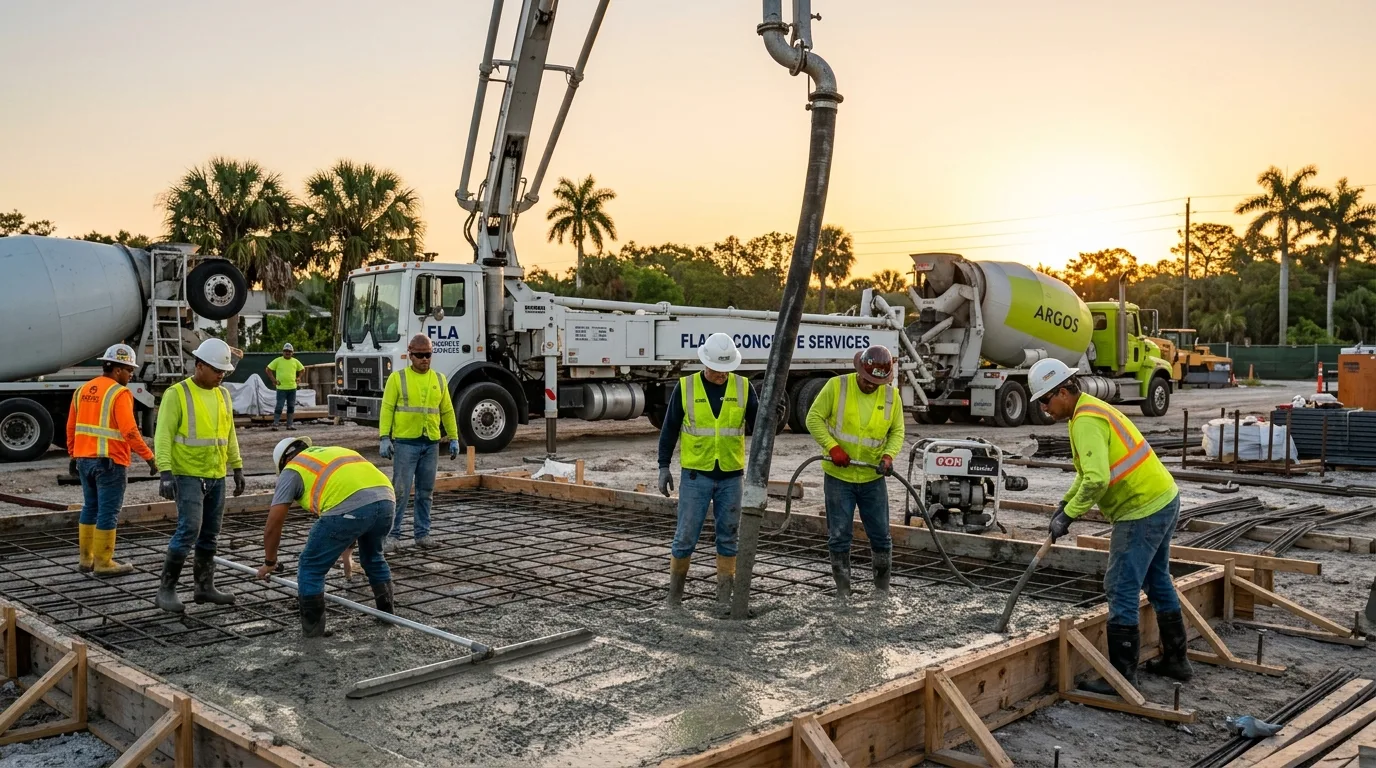
Largo homeowners planning a concrete driveway, patio, or slab often ask whether timing matters — and in Florida, it matters more than most people realize. The difference between scheduling your pour in October versus July isn’t just about convenience; it’s about concrete curing quality, crack risk, and whether your surface will hold up for thirty years or start failing within five.
In this post, we cover Largo’s concrete season by season, the specific weather risks by month, and how experienced contractors manage summer pours when waiting isn’t an option.
Ready to Schedule Your Largo Concrete Project?
We work year-round and manage weather risks professionally. Call (888) 376-0955 for availability.
Why Timing Matters for Concrete in Largo
Concrete cures best in temperatures between 50–80°F with moderate humidity and no rain. Largo’s humid subtropical climate delivers those conditions reliably for about five months of the year. The other seven months require active management to achieve comparable results.
The core problem is twofold: heat drives rapid evaporation from the concrete surface before it sets properly, causing plastic shrinkage cracks. Rain — especially the afternoon thunderstorms that hit Largo almost daily from June through September — can wash uncured concrete, dilute the water/cement ratio, and introduce surface defects that become visible once the concrete dries. Neither problem is insurmountable, but both require an experienced crew with the right materials and early start times.
Pinellas County’s sandy soil adds another timing dimension: in the wet season, the high water table rises to within a few feet of the surface in some areas, particularly near Eagle Lake Park and low-lying sections of Walsingham. Installing concrete slabs over saturated sandy subgrade leads to differential settlement as the soil dries and shrinks over the following dry season. Timing installation for the dry season allows the subgrade to reach a more stable moisture level before the pour.
Season-by-Season Guide for Largo Concrete
October – March (Best Season) This is the prime window for concrete installation in Largo. Florida’s dry season brings stable temperatures in the 60–80°F range, humidity that drops significantly from summer peaks, and very few afternoon thunderstorms. Morning starts still get ideal conditions for the pour, and cure proceeds consistently over the following days. Joints and formed edges hold their shape without the thermal stress of summer heat. This is when to schedule large projects: driveway replacements, stamped patio installations, and commercial concrete work.
Winter also brings a side benefit: some Largo contractors offer 5–10% discounts during November–February when residential demand drops and crews have more scheduling flexibility. If your budget is tight, scheduling in this window can reduce total project cost.
April – May (Shoulder Season) Late spring is still workable for concrete in Largo, but conditions shift. Temperatures climb toward the upper 80s, humidity begins rising, and late-afternoon storm risk increases as the Gulf of Mexico warms. April and early May remain good for most residential concrete projects. By late May, afternoon thunderstorm frequency picks up and summer protocols (early morning scheduling, evaporation retardants) become necessary for larger pours.
June – September (Summer — Manageable with Experience) Largo’s rainy season brings daily afternoon thunderstorms, temperatures in the low 90s, and high humidity — the hardest conditions for concrete installation. None of this prevents concrete work, but it requires: early morning pour starts (6–10 AM, with the pour complete before noon), evaporation retardants applied to control surface moisture loss during the pour, active monitoring of storm forecasts on pour days, wet burlap or plastic sheeting to protect the surface during cure, and a crew experienced with Florida summer timing.
Contractors who try to pour in the afternoon during June through September in Largo, or who don’t use evaporation retardants on exposed summer pours, are going to have problems — either rain-damaged surfaces or plastic shrinkage cracking from rapid evaporation. The question isn’t whether summer work is possible; it’s whether your contractor has the protocols to manage it.
Hurricane Season Consideration (June – November) Concrete must reach full cure (28 days) for structural integrity before a major storm event. If you’re pouring a critical structural slab during hurricane season, timing the pour to reach full cure before any named storm threat is prudent planning. For patios and non-structural work, this is a lower concern.
Practical Uses for Seasonal Planning
- Scheduling driveway replacement: Target October–March for the most straightforward installation. If your driveway is failing before summer, a May pour is still feasible but requires morning scheduling.
- Planning a stamped patio: Stamped concrete timing is the most critical because the stamping window depends on concrete consistency — summer heat compresses this window to 20–30 minutes. Schedule stamped work for October–March whenever possible.
- Coordinating permit lead time: Permits through the Largo Civic Access Portal take approximately 14 days. Submit the application in late September for an October start — waiting until October to apply loses two weeks of prime season.
- Scheduling commercial work: Large commercial pours that must be completed in one session are especially weather-sensitive. Schedule concrete slab pours for October–March to avoid summer thunderstorm risk.
- Pool deck resurfacing: Pool deck resurfacing in summer works because the area is typically shaded by the house for morning shade — schedule morning pours and you can work efficiently through the rainy season.
- Budgeting for discounts: Some contractors discount winter work by 5–10%. If you’re planning a spring project, ask whether a November booking would reduce the cost.
How Summer Concrete Pours Work in Largo
When a Largo homeowner needs concrete in June or July, here’s how professional crews manage the pour. Work starts between 6–7 AM — early enough to complete the pour before Largo’s afternoon thunderstorms, which typically build after 1–2 PM. Evaporation retardant is applied to the surface as finishing progresses to control moisture loss and prevent plastic shrinkage cracking. The crew monitors radar on pour day — a storm moving in before the concrete reaches initial set is a risk that experienced contractors actively track.
After the pour, wet-cure methods (damp burlap, curing compound, or plastic sheeting) protect the surface for the initial 7-day cure period. With these protocols, summer concrete in Largo can achieve results comparable to dry season pours. The variable is always the crew’s experience with Florida conditions — contractors who manage summer pours in Pinellas County regularly will have these protocols as standard practice, not improvised responses.
Scheduling Your Largo Concrete Project? Call (888) 376-0955
Year-round concrete installation with proper summer protocols for Pinellas County's climate.
Cost Factors Related to Timing
Winter pours may carry lower labor costs due to contractor availability. Summer pours may include a small premium for early-morning scheduling and evaporation retardant materials. The cost differential is usually modest — $0.25–$0.75/sqft — but the impact on cure quality can be significant if the contractor doesn’t have proper protocols. Ask any contractor you’re considering: How do you handle summer pours in Largo? What evaporation control do you use?
Frequently Asked Questions
Does Largo get frost? Does it affect concrete?
Largo essentially never experiences frost — average winter lows are in the 50s. Freeze-thaw cycling, the primary cause of concrete spalling in northern states, is not a risk in Pinellas County. This is one of the reasons concrete longevity in Largo can exceed 30–40 years with proper maintenance — the climate is actually favorable for concrete durability once the heat and humidity challenges of installation are managed.
What happens if it rains on fresh concrete in Largo?
Rain on freshly poured concrete before it reaches initial set is a problem — it dilutes the surface, can wash away cement, and creates surface defects. This is why summer pour scheduling in Largo requires early starts and radar monitoring. If rain hits concrete after initial set (typically 2–4 hours after pour), the damage is usually limited to surface texture issues that can be addressed. Our crews monitor forecasts specifically to avoid this.
Should I wait until fall if my project is needed in summer?
For most concrete projects, a properly managed summer pour is fine. For stamped concrete — where the aesthetic quality depends on the stamping window — we prefer fall through spring scheduling for the best results. For functional driveways, slabs, and patios, summer works well when managed correctly.
Related: